
Bruck
In praise of litterpicks

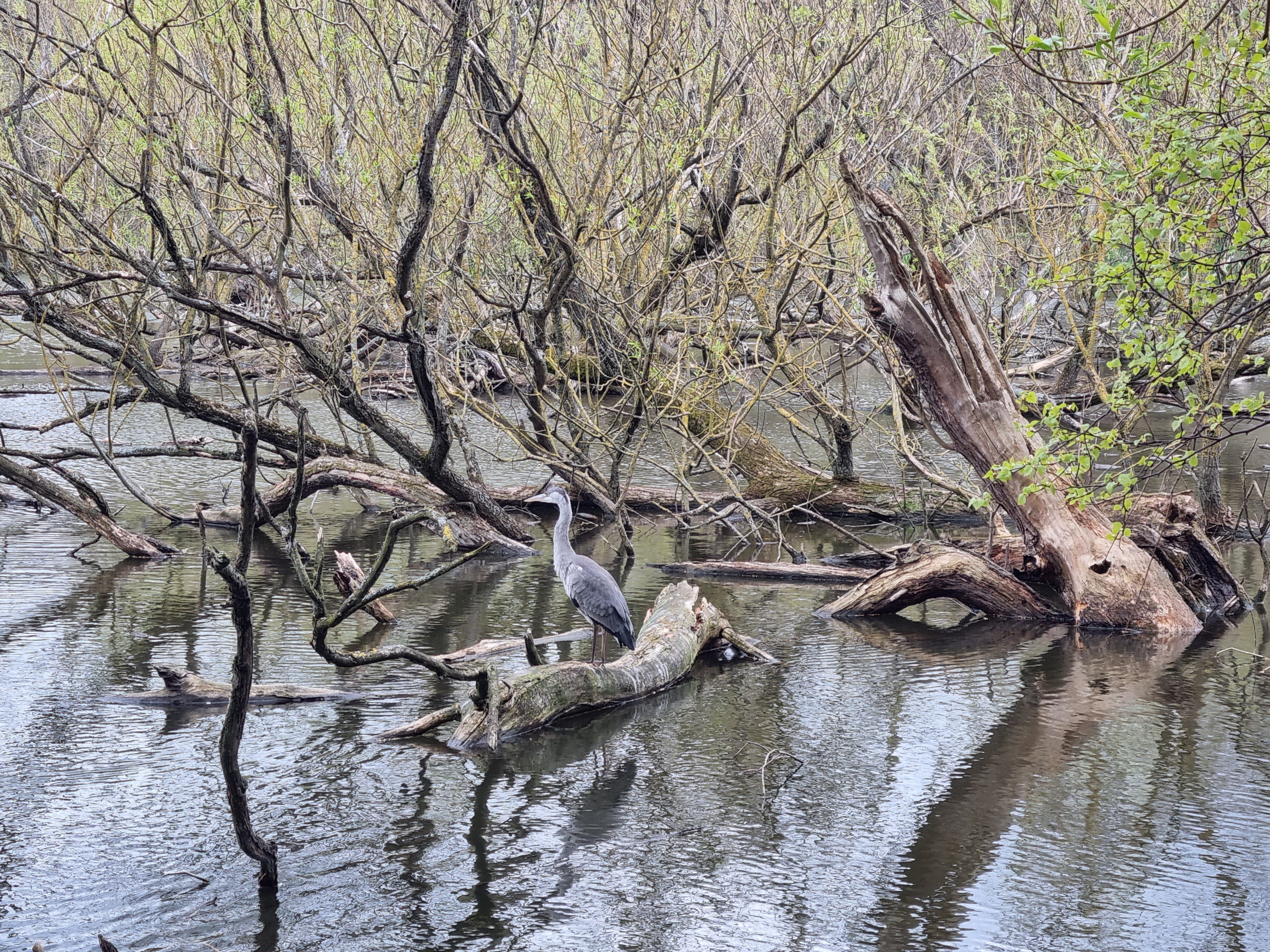
My local park is an accidental swamp choked with drowned motorbikes and scraggly herons. The local authority tried to fill it in with building rubble after a child drowned. It’s one of the only natural lochs in Edinburgh, watched over by a squat doocot that used to be a plague kiln. I like to peer through the iron bars at dead pigeonlings buried in the guano mound. Once along the muddy track I saw a nest of baby rats in a rotting tree stump. In summer the swallows hold raves over the water. This year, in the bright optimism of those overhot months, the Council built a new viewing platform from which folk like to empty entire bags of sliced bread. Within a fortnight some boys had rolled a bin onto the platform and set it on fire. I think this park is the most beautiful place in the city. In the spring of 2020 I walked around it every day.
On Saturday I spent two hours with two dozen other volunteers picking up litter, assembled by the park’s Friends. I was assigned the stands of trees by the football field, so I spent my time wading through bloodhungry brambles and pushing aside emaciated birches to hunt out all the stashes of cans. That slow task gave me plenty of time to think about what I was doing and why it made me so happy.
The first and simplest answer is that picking up litter makes me feel like a child. In Orkney there’s an annual litterpick called Bag the Bruck, which goes back at least 30 years, because I remember strolling the ditches of my home island with rubber gloves and a bin bag and thinking it was the most fun anyone could have. I did not, as I’ve written, have the easiest childhood, but I loved being outdoors, where I didn’t have to talk to other people and could pay attention to whatever I wanted. The wind and the rain were good friends to me, and I always fell into whichever rockpool was closest. I don’t recall having any particular environmental consciousness beyond having been taught that picking up litter was the right thing to do, but I do remember the satisfaction of a full black bag.
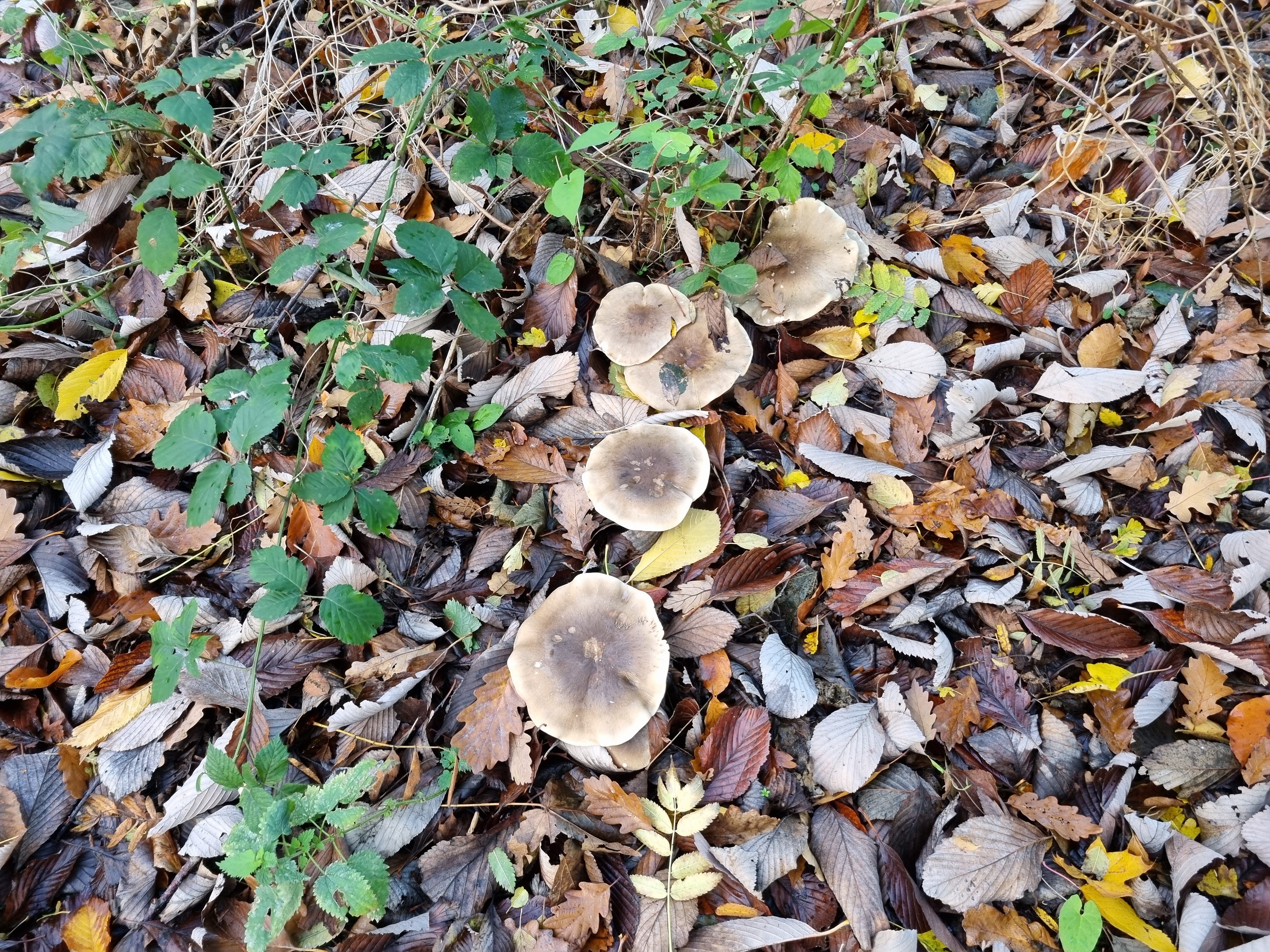
Litter is still just as pleasurarable to spot, hidden enough to be satisfying, obvious enough to be unmistakable, like a flashing pick-up, like the spots on a minimap: silver and purple and red, colours you can’t otherwise find in a muddy ditch or on a wet beach. Clearing a copse of cans makes me feel exactly the same way as hundred-percenting a region of that terrible closed thing, an open world videogame, except that among the trees I can smell pine sap and leaf rot. Why play the game, when a shiny label awaits me under the yellow and brown leaves? On the screen, the busywork is dissociative, but in the park, the cold effort tends to me associations.
Picking litter requires a precious kind of paying attention. “Nature connection” is the kind of neologism created only through its own deficit, of which we have plenty. A recent study found the UK close to the bottom of a nature-connectedness scale, despite being roughly in the middle of a nature exposure scale: we’re outdoors, and we look, but we’re not paying attention. A closer scrutiny of the actual questions in the survey suggests that “nature connection” here is describing a very particular spiritual outlook, one which I do happen to share, rather than any more neutral measure of what such connection could entail. Picking up a little green bag of abandoned dogshit is not liable to make me think that “I feel that all inhabitants of Earth, human, and nonhuman, share a common life force”, though it is precisely because “I think of the natural world as a community to which I belong” that I am picking up the little green bag of abandoned dogshit. And to see the dogshit is to be attuned to the colours of the leaves at this precise moment of autumn, and to find the last prawn cocktail crisp packet is to listen for a rustle in the thorns. I am more mindful when collecting drinks cans than when I’m walking up mountains: the summit’s grand purpose distracts from presence, but spotting the fag packet requires being in the world. There is no illusion of wilderness here, no barrier between humans and nature beyond the anti-drowning fences: this park belongs to humans as much as herons.
Recently, I was listening to a podcast, which is one of my vices, and heard Jeff Bezos talking absolute shite:
It is a fact that 500 years ago, pre-Industrial Age, the natural world was pristine. It was incredible. And we have traded some of that pristine beauty for all of these other gifts that we have as an advanced society. And we can have both. But to do that, we have to go to space.
Every element of this is wrong. The natural world was not pristine 500 years ago: it was already extensively shaped by humans, who have been geoengineering for at least 12,000 years, and the stewardship practices of so-called hunter-gatherer societies are any guide then much further back still. The suggestion, meanwhile, that we can establish a meaningful scale of energy production and resource extraction in space without pushing the planet to genocidal levels of ecological collapse is the most destructive wishful thinking we geoengineering apes have ever invented. Both falsehoods rely, with comical obviousness, on a colonial nature-culture binary which produces further contradictions, such as imagining outer space as an entirely human place which is good to exploit in order to save this other nature on the planet Earth. The fantasy appears to be to separate us entirely from nature so that we can properly enjoy it. This is of course the very same logic which drives globalised capitalism and its associated conservation efforts today, merrily dumping all externalities beyond the imperial core: rewild Britain and import all our food; protect the English countryside from solar farms but drill the Arctic; push all the people out of a National Park but don’t build social housing in cities. The con artist’s avoidance of paying for externalities (carbon emissions, worker injuries, depletion of ecological services) is what enables Bezos to buy a superyacht, which he is now convincing himself is justified by buying himself a spaceship. This refusal to take responsibility for one’s effects in the world characterises Silicon Valley’s ruling class, a psychology at its most grotesque in Elon Musk’s insistence on producing children without any desire or ability to parent them. As with Musk and Bezos, there is always some greater logic, some overarching plan which justifies their obscene consumption, a deluded utlitarianism resting on their perception of their own poetic insight. I suspect that it’s not possible to be that rich and live with oneself without some variant of the belief that one is an extra special boy who deserves an extra special treat for his extra special ideas. That’s why we have the pathological absurdities of effective altrusim.
But someone has to pick up the litter. There is no solution to getting all the beer bottles out of the park than someone going out there and picking them up.
Paying attention to the litter and where it appears does of course suggest some necessary systemic responses. The bulk of litter by volume is bottles and cans of beer, with a side order of energy drinks, and no-one is drinking all that in the park if they have somewhere else to go. Funding youth clubs and housing-first anti-poverty policy would go a long way to reducing litter in parks. The bulk of litter by items is disposable packaging: coffee cups, single use vapes, meal deal sandwich wrappers. Factoring in those costs at source rather than letting them be another uncosted externality – that is, something retailers extract from taxpayers as profit – would go a long way too. Likely the quickest and easiest way to cut litter would be to establish a bottle deposit scheme, but the last Tory Government torpedoed that in a vicious little political manoeuvre to exert political authority over the Scottish Parliament and sow discord between its ruling parties, an event that might have been resisted more if it hadn’t been played alongside an even bigger such manoeuvre attacking the nation’s favourite punching bag, trans people.
Noticing what is thrown away and where also illuminates the psychological element of littering. The vast majority of litter I see is produced by three legal dissociative drugs: alcohol, caffeine and nicotine. That is, we litter most often when taking something – and I say this as a 20-year caffeine addict with no intention of quitting – that helps us cope with the world by detaching us from it. It’s when I’m at my saddest that I’m most liable to produce rubbish, and while I have never once in my life intentionally littered, there have been a few miserable times when I’ve let some nasty scrap blow across the street or the hillside without chasing after it. We all have a little Bezos inside of us, a little emperor who doesn’t want to clean up after himself. But someone has to pick up the litter.
The left-wing version of conceiving of oneself as a special boy who doesn’t have to tidy up is to ascribe all ills to capitalism and to see all attempts to ameliorate those ills as fruitless. Why bother volunteering when you could be campaigning? Isn’t praising litterpicks bourgeois moralism? There are certainly times when I’m picking up the same cans of rocket fuel from next to the school gates – teachers, why are the boys tearing cans of Monster into lethal strips? is it an Andrew Tate thing? would they laugh at me for saying that? – when I’m inclined to agree. No matter how much litter I pick up, more appears. Once I saw the bin lorry drive down the bike path to empty the two wheelie bins our underfunded area has been granted, the two bins where I place my full litterpicking bags, and saw yet more loose litter spewing out the stinking back of it. But when, in the fulness of revolutionary time, there are barricades to man, someone still has to bring cups of hot tea. And when victory is declared, and those barricades come down, someone will have to clean up.
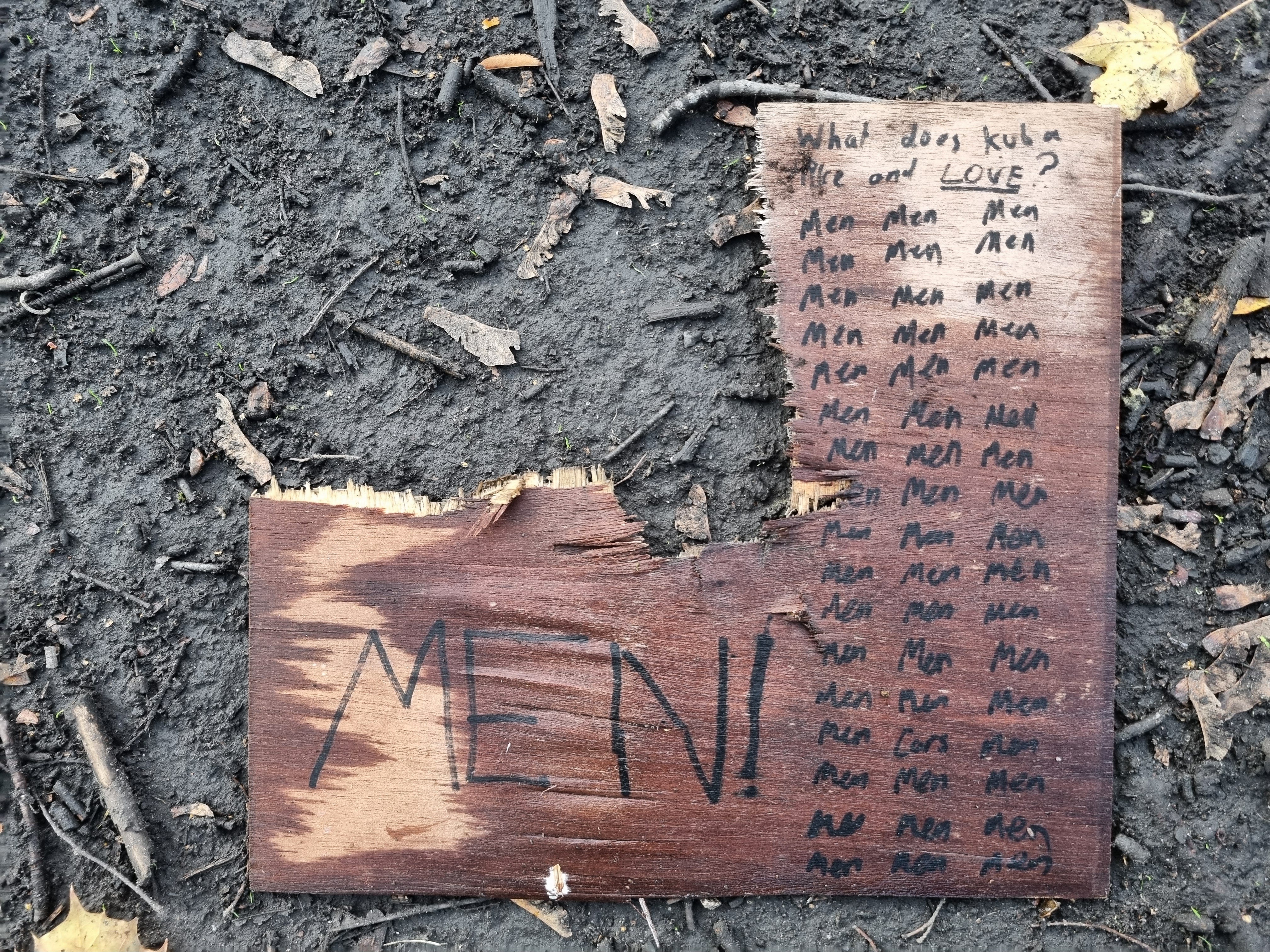
I’ve written before about the consolations of community-based work, of spending time building and repairing resources in your local area, not as a substitute for strategic political work, but as a necessary part of it. It is necessary to form mutually responsible relationships with other humans and the other beings in the world of which we’re all part, because otherwise there is to ground on which to stand and from which to campaign. The reason I pick litter in my local park is because that park looks after me, and so I want to look after my park. I find in the minor work of repair that is the litterpick an affirmation of mutual responsiblity and connection that seems an antidote to the spacefaring brainuploading longing that bedevils our ruling class. When their bodies are frozen in a cryogenic vault, there’ll still be litter to pick, and who’ll be happier? All this I find alongside more mundane pleasures, the bizarre finds that promise desperate stories. Why was a cat tower in the loch? Who abandoned the Dominos bag in the woods? Why was the word MEN scrawled on this square of rotting wood over and over? Those two squirrels watching me, with their white bellies and black eyes, what do they want?
There’s something else, though, that I find in the litterpick: forgiveness. It is, I think, not possible to stay angry about litter and keep on picking it. I am quite a judgmental person in day-to-day life, perpetually disappointed by everyone who’s failing collective action problems, perpetually criticising myself and by extension every other person for not being somehow better. I suspect this has something to do with growing up in both a sprawling lapsed Catholic family and a Protestant community of intense mutual surveillance: all of the guilt and none of the confession, all of the obsession and none of the salvation. Before I picked litter, I would walk down the bike path raging at each Tesco bag and Buckfast stash. “Who does this?” I would say out loud, over and over. It’s easy to become a tutting neighbour, to imagine oneself the only decent person in a delinquent world. You can’t stay in that mindset and fill up rubbish bag after rubbish bag. Anger only gets you so far. Pick up enough litter, and you start to understand why it happens. Pick up litter with enough people, and you realise that, despite all the damage that the special little boys can wreak, there are far more people around who are dedicated to tending to each other and to their world. Pick up enough litter, and you realise that we all share in making it, just as we all share in cleaning it.
There’s no space rocket, no short cut. Someone has to clean up the litter. I’m glad that sometimes it’s me.
What I’m Doing
A few years ago I made a sound poetry score called Out of Existence in collaboration with Vivien Holmes, who made the first recording. Ever since I’ve wanted to do a full choral performance, and that is now coming into being on Saturday 22nd November at Push the Boat Out as part of an afternoon of trans art. I’ve brought together an ad hoc choir to sing, scream and whisper: it’s a glorious noise.
The next day I’ll be chairing a panel on minority language translation with Robbie MacLeòid, Colin Bramwell and Juana Adcock. What are the tensions when translating between colonial and colonised languages? What happens when we put national texts into minor tongues? What do we owe the languages we work with? I’ve wanted to have this conversation with these folk for a long time.
What I’m Reading
R.F. Kuang’s Katabsis is dedicated to the pleasures of the journey through hell, and I was moved further than by any of her previous work.
Zarina Muhammad and Gabrielle de la Puente continue to remake what criticism is for with Poor Artists, which reminded me why I do this.
I’m buried deep in the Collected Poems of George Campbell Hay / Deòrsa mac Iain Dheòrsa, with whom I can feel a new fixation growing.