
Swappan Solans
On seabirds and food systems

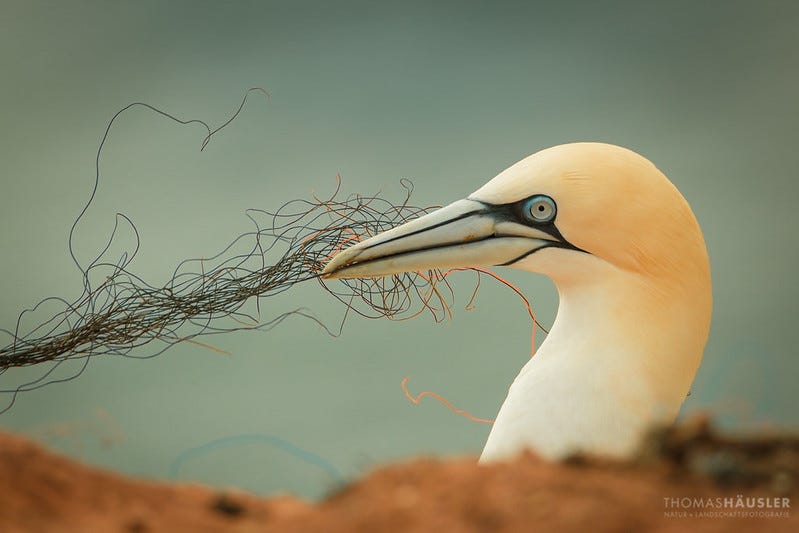
Every small place has its poem. Even in days when, in the Anglosphere at least, poetry has lost most of its significance to public life, there are songs that folk hold close, that say something specific and vital about somewhere specific and vital. These little patriotisms have less to do with the grand ambitions of the nation state and more to do with the way feeling is archived in the landscape, with how memory shapes what we do in the present.
Here’s the little poem of my place. It’s written by Robert Rendall, poet and naturalist, born to Westray parents, who accidentally discovered an Iron Age village when he was 30.
The Cragsman's Widow

He was aye vaigan b’ the shore,
An’ climman round the crags,
Swappan the mallimaks,
Or taakan whitemaa aiggs.

It’s six year bye come Lammas,
Sin’ he gaed afore the face,
An’ nane but an auld dune wife,
Wis left tae work the place.

Yet the sun shines doun on a’ thing,
The links are bonny and green,
An’ the sea keeps ebban an’ flowan,
As though it had never been.

(He was always wandering on the shore / And climbing on the cliffs / Netting the fulmars / And taking seagull eggs // On Lammas day it’ll have been six years / Since he fell from the cliff and died / And no-one but an old woman of the dunes / Was left to work the place // Yet the sun shines down on everything / The coastal ground is pretty and green / And the sea keeps ebbing and flowing / As though it had never been)
The poem, the only poem to be given a plaque in our main town, commemorates a vital component of Scottish coastal food systems, going back centuries: seabirds and eggs harvested from the cliffs. I say commemorates, because even in the mid-twentieth century Rendall saw this traditional approach to food, and the prized climbing skills that went with it, fading into memory. He talks about the harvest as work, as a lived and effortful relationship to nature; without the cragsman, the cliffs are beautiful and inhuman. The widow who works the shore – she’d be gathering ebb-meat and ware, shellfish and seaweed – will be gone soon too.
When I was growing up in Westray in the 90s, I remember folk talking about bird an egg harvests, but I never heard of anyone doing it in my lifetime. (I wouldn’t be surprised to learn that it still happened occasionally and in secret). Folk still gathered ebb-meat, though that was mostly thought of either as a poverty food or as a product: as a teenager, I gathered whelks in season to sell by the bucketload. Food still came from the farm, the garden and the sea, but mostly from Rendall’s the shop – a relation, I expect – where totals were written down in an account book, to be settled when there was money. These days, a lot of folk catch the boat once a week to do the big shop in Tescos.
Rendall the poet is nostalgic, but without bitterness, because something endures beyond these human lives, their concerns, and their traditions: the green links and the cycle of the tides – in other words, God. I recognise both the nostalgia and the equanimity as aspects of Orkney character and literature: folk are sorry for the days that are gone, but don’t miss the difficulty and sometimes the poverty of the work. But that ebb and flow suggests something else, too: that if one way of relating to nature’s food systems has ebbed, it may well flow again in the future.
There is one place in Scotland where the seabird harvest persists, and has since it was first recorded 500 years ago, and likely since long before that. That’s Ness, in Lewis, where each year a group of men has sailed to take a harvest of young gannets, guga. The harvest has persisted through an era where abundant protein is readily available from Tescos, and that by itself says something about the cultural significance of the difficult work: we do this because we do this, and because by doing it we’re saying something about who we are. Every small place has its poem.
I’ve watched with confusion and consternation as the guga harvest has become a national and international controversy. Wild harvesting – and I say this as someone who went vegetarian at 15, who was vegan for the best part of a decade, and who was once sheltered by anti-vivisection squatters after being beaten by police at an environmental protest – is present enough in my cultural memory to not strike me as strange, and I couldn’t imagine why folk from elsewhere suddenly had such strong opinions about it. The word “tradition” here is misleading, suggesting this is somehow an eccentric ritual practice, and not simply the way the way that most humans have sourced most of their food until just the last couple of decades: gathering, rearing, growing and hunting whatever the local ecosystem best offers.
It’s not as if I don’t care about gannets. Solans, I’d call them, in a word I share with the sùlairean of the Gaelic-speaking Nisich. We both learned that word from the Norse sùla, a name given to many a fishing boat. It’s the name of the hero’s boat in Neil Gunn’s novel of the transformative power of the herring harvest, The Silver Darlings. It’s also the name of a tourist boat in the Forth which I took each year to the Bass Rock, the world’s largest solan colony, and truly one of the very greatest natural spectacles I know. I say took in the past tense, because I can’t bear to go there now. In 2022, as humans were struggling to recover from our own pandemic, a brutal avian flu wiped out a third of the Bass’s solans. Even from the shore I could see that the rock had changed colour: too much black and grey where I should be seeing white feathers and guano. I took my sister to see the Bass when we were allowed again, and she was awed – a hundred thousand gannets it still astonishing – but I felt fear and grief. A grief not only for those birds, but for every seabird colony I know and love, for the pickies and bonxies and the aaks I’ve never eaten, all struggling under humanity’s temporary rule.
So it’s not that I don’t know that folk love birds, or that they’re at critical risk from our choices. It’s more that I’m baffled as to why the guga harvest should be such a prominent target of ire, when the food systems that most of us live from are so catastrophically destructive and cruel. The industrialisation of animal life is a major contributor to both the climate crisis and to avian pandemics – the two biggest threats to the solans and to many other vulnerable bird populations – and it’s also unimaginably brutal. The way that most food animals live, from battery hens to caged salmon, is so obviously appalling that industrial agriculture companies try to use the courts to prevent anyone from seeing it.
Even in small-scale and organic agriculture, animal protein requires suffering and killing. Sheep don’t particularly want to be dipped or docked; cows don’t want to lose their calves or be hooked up to milking machines. I honestly don’t believe that most folk are able to think clearly about what is actually required to produce food, or about the complicated ethical relationships that entails. When you’re from an agricultural community, though, you can’t help but see the way that our lives are bound up in animal suffering – and also how those who take responsibility for killing are often those most likely to care as best they can for the creatures they kill. Agriculture equires this kind of entanglement. The cultural demand for ever-increasing quantities of cheap animal protein, however, directly cheapens animal life, forcing those who work in food production to make more and more compromises. I can understand, then, a committed vegan position that’s against all animal protein. I would not guess, however, that the diet of the great majority of signatories to the anti-guga harvest campaign could stand up to such ethical scrutiny.
There’s no escape from human’s responsibility for death. We’re ecosystem engineers capable of far greater effects that any other species, and there are no easy decisions about how we do that. Protecting birdlife in Orkney requires us to exterminate the invasive stoat population; Highland ecosystem restoration, with all the species that can support, requires mass culling of deer; red squirrels can’t live without us killing grey squirrels. Living without animal protein, in our current international industrial food system, also doesn’t free us from these ethical chains: all agriculture requires species control, all harvesting kills, and industrial production and shipping methods are significantly responsible for the climate and biodiversity crises.
Personally, I’d much rather folk sourced their animal protein through a quick death in a wild harvest than through industrial agriculture. In the face of these ethical challenges, I wonder if it’s precisely the guga harvesters’ proximity to death that so repels people. In the UK, we live in a culture of mass denial, a collective shirking of our ecological and political responsibilities, a collective refusal to look clearly at our complicity in death. Is it the very rupturing of that denial that’s the problem? Is Ness’s crime to openly acknowledge what so many refuse to, that life and death are intertwined?
That’s perhaps too speculative, and there’s a more straightforward explanation: the guga harvest is an easy and acceptable target. News reports on the guga harvest generally mention the important of “tradition” or “history”, but what I have not seen a single news report mention is that Ness is an important stronghold of Gaelic language and culture. I first learned about the details of the guga harvest at Comunn Eachdraidh Nis, the local historical society where Gaelic is the default language. What this means is that Ness is a culture of survival, a place where people have held on to language and community through centuries of explicit attempts at extermination and implicit structures of marginalisation. Lewis is also the home of one of the most significant and militant land struggles in UK history. No wonder that Nisich also held on to harvesting the crags. But what this also means is that Ness faces structural exclusion from the state and from media, alongside widespread ignorance and prejudice about what local life is actually like. When news broke yesterday that NatureScot had recommended not awarding the harvest license this year, amid paragraphs of planned comment from anti-harvest campaigners I saw not a single word from a person from Ness.
You don’t have to dig far into the Facebook comments on any story about the guga hunt without seeing the words that tell you what’s going on: “barbarians”, “savages”, “uncivilised”. Although Gaelic claims to indigeneity are, within the specific colonial history of Scotland, very fraught to make, the structures of colonial thought are not at all shy. We’re primed to see islanders, and Gaels particularly, as ignorant, as strange, as a lesser sort of person. To take direct responsibility for killing the food you eat is savage; to buy a factory-farmed chicken from Tescos for £4.60 is civilised.
The shattering of traditional food-systems was and is a central aspect of the long campaign against Gaelic people and culture. Gaels were forcibly cleared from subsistence agricultural communities into industrial production, such as providing kelp ash as a raw material to the early industrial revolution, and international food systems, such as the herring trade documented so memorably in The Silver Darlings. The argument was often made that forced removals were a way to rescue Gaels from barbaric poverty into civilisation, just as English could rescue them from a savage tongue. When these wonderful new economic opportunities collapsed, as the kelp industry did following the end of the Napoleonic War, Gaels were recruited, forcibly or otherwise, into the civilising mission of settler-colonisation. This is only the beginning of a long history of British state structures saying to Gaels, “The way you do things is wrong and backward, and you must join our civilisation. Work in our industries and fight in our wars, and you’ll be rewarded.” But instead of reward there was always betrayal, always another demand to move on.
One of the better-known effects of Clearance is the consolidation of the Highlands into “sporting estates”: with Gaels evicted, the mosaic ecosystems of the glens, woods and hills could be converted into the treeless landscape of deer park and grouse moor. Here, killing becomes not a subsistence practice but a game for the rich, and serving that game is one of the only economic opportunities left in the Highlands (it’s that or renting them AirBnBs). It’s a peculiarity of British culture that “hunting” here designates not a food system but a ruling class sport, in many case one that requires outrageous cruelty (as in English fox-hunting) and ecological catastrophe (as in Scottish grouse-shooting, which is also a form of industrial animal rearing and a major vector for bird flu). The image of a British hunter is that of a moneyed soul who pays a working-class person to know the landscape, do the hard work and line up the shot. Did you know that the word “gillie”, the Scottish word for a hunt attendant, the person who actually knows the landscape and its animals, is just the Gaelic for “boy”? Fetch me my gun, boy. The contemporary licensing regime for wild animal hunting and harvesting thus has its origins in the ruling class control of food systems, in which aristocrats somehow believe they own the animals on their land and can prevent anyone else from eating them. When you kill for fun, it’s civilised hunting, and when you kill for food, it’s savage poaching.
This is a cultural regime as much as an economic one, one which breaks folk’s emotional and ethical relationship to the food they eat, making us all dependent on cruel and exploitative systems controlled by the ruling class. An ecological alternative, a sustainable society, depends on us remaking the links. We have to entangle ourselves with what we eat. I’m sceptical of whether, in these islands, a sustainable food system could exist without animal protein, and that means that genuine hunting and wild harvesting, with respect and within ecological limits, should be part of our lives. The rise of hobbyist foraging among the environmentally-minded is in a way an acknowledgement of this need: ebb-meat and ware are back in, though now as part of an elite cultural practice. Those who run foraging courses are usually eager to talk about how to forage responsibly, ethically and sustainably, in order to protect ecosystems and future harvests. If we’re going to eat meat, milk and eggs, we need to be able to bring the same expertise to animal protein – and that requires preserving the knowledge and skills of those who work within those systems.
British food systems and ethical norms as they are now are destructively incoherent. We mark some species for suffering and death, just as we mark some people, while we decide that others must be protected. The frequent use of “innocent babies” by anti-guga harvest campaigners tells us what’s happening here: we want to imagine some aspect of nature as free from human taint, but it isn’t. Gannets, like humans, are predators. No animal is any more guilty or innocent than any other. We love our cats and dogs, predators both, but dismiss their enormous ecological impacts, both through their meat consumption and their impact on bird populations when we let them loose. We love the idea of wildness, but want to prevent anyone from having any kind of intimate relationship with it. Wild fish can be taken, but wild birds can’t; industrial trawling of fish can be licensed, but a small-scale harvest of birds can’t. Ness has become a scapegoat for these contradictions, banished to the wilderness with our sin, our collective responsiblity for animal suffering. Our ethical lines make no sense, and it’s killing us.
How do we want to eat? How do we live in ethical relation to the creatures we depend on? How do we stop denying death and take responsibility for it? Are there communities who know how?
It looks likely that the guga harvest will be prevented this year. NatureScot’s decision is based on a very strict application of the precautionary principle: they’ve argued that it can’t be proven that taking 500 birds won’t negatively impact Scotland’s gannet population as a whole, though evidence suggests it won’t impact the local population, and so that there should be no license. This strikes me as a temporary compromise, one which avoids the inflammatory question of whether the guga harvest should ever take place by recommending a pause and further study. They may hope for more time and more calm, but given how strong opinions have grown, and how much Ness has become a target for anger, I suspect we’re going to be hearing a lot more about guga for years to come. I hope that the folk of Ness are able in that time to share greater understanding of the value of what they do, but I also know that that work will take place in the teeth of centuries of civilised ignorance. Then again, civilisation too ebbs and flows.
I’m aware that this is an inflammatory subject, and I’ve said enough things here that are likely to annoy just about everyone. I’ve left comments on, and you’re welcome to discuss, but I’ll delete anything abusive and if it gets to be too much I’ll just turn them off.
What I’m Doing
My poetry and sound work with Callie Rose Petal, Attis in Caledon, is out on Radio Atlas now.
My essay on Cruachan Beann is published by Batsford this week in Women, Walking.
On Sunday 16th August at 6pm, I’ll be reading with Helena Fornells Nadal and many others in Peter Mackay’s Our Many-Voiced Country, a project of Scottish poets translating each other.
And on Sunday 23rd August at 5.15pm I’ll be speaking to Chris Kraus about her new novel, The Four Spent the Day Together.
What I’ve Been Reading
I’m tackling Ngũgĩ wa Thiong’o’s Wizard of the Crow, which is vast and brilliant, and is helping me think more clearly about how orature and literature can work together.
Nghi Vo’s A Long and Speaking Silence is the most ethically complex so far of the series, which is the best fantasy series I've read. They’re all about stories, but this one is about who has the right to tell and why.
Anna Nygren’s blush / river / fox is reminding me that poetry should be about idiosyncratic language: it breaks language convention to communicate how one person thinks.
I'm heartened by this post . There are such disparaging comments from people who have never eaten summer grilled mackerel as a child, or had a glass of milk fresh from a cow ( disgusting as it was ) and have no idea of a world where you might get a sheep butchered expertly in a box from your local farmer ( possibly bypassing some law, but possibly not). Or perhaps latterly a bag of shelled clams to cook in the microwave with cheese on top! These are the ways that people in rural and island Scotland feed themselves in a food culture that otherwise provides highly processed and packaged foods, sold at a premium in wee shops and supermarkets, where everything is more expensive because it's classed as a "Metro" store and only the most popular and durable items make the trip. Some wilted vegetables, and definitely not the range of fruits available in the city.
What gives a social media influencer the right to parade around in a circus of performative nonsense dressed as a gannet- demeaning that beautiful bird and making a mockery of Gaelic culture? If you ever wanted to feel colonised before the Edinburgh festival had even begun, he's your man.
There will no doubt be far more gannets killed by El Niño and industrial nets than are swiftly despatched by the Niseach.